
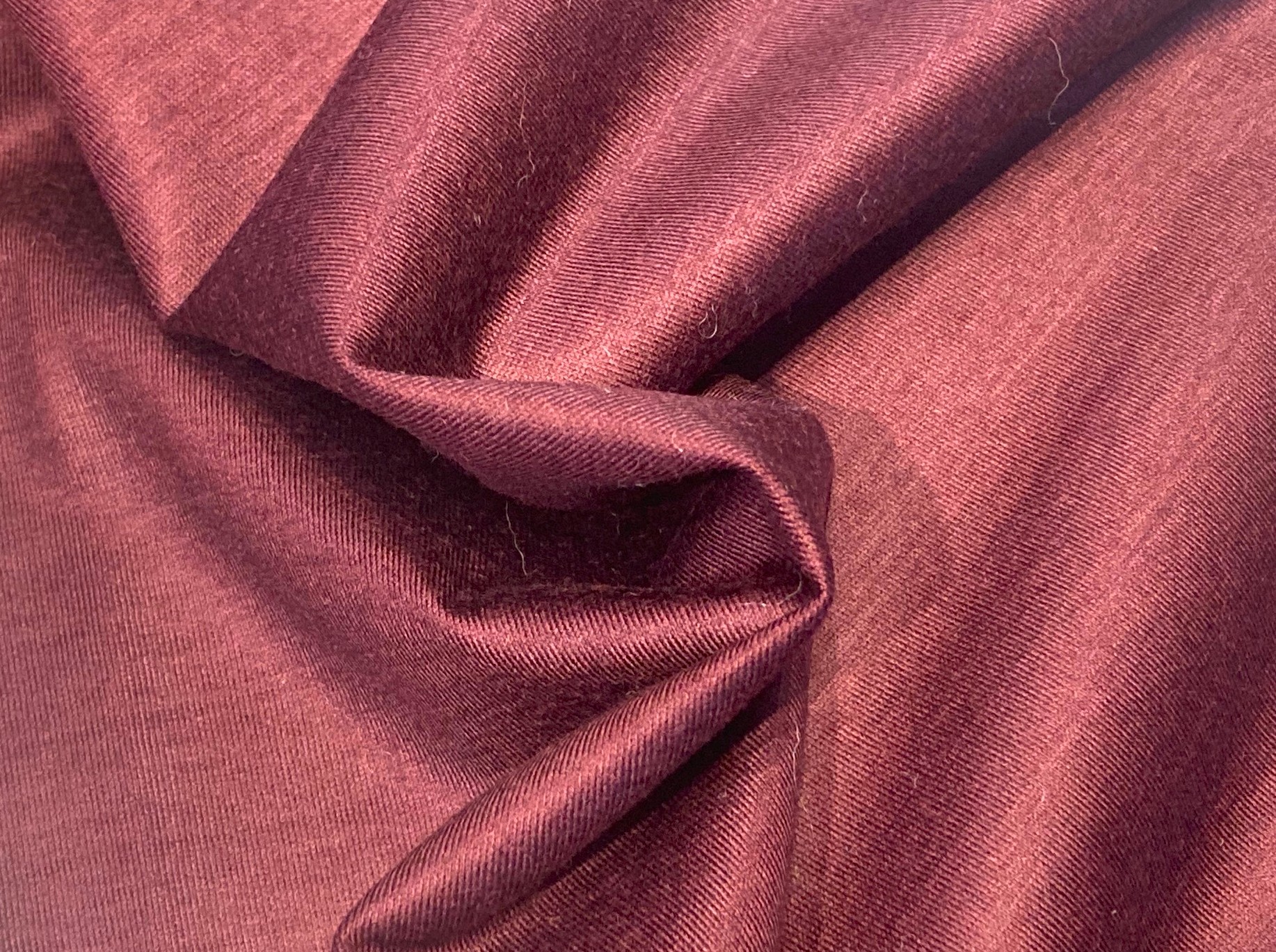
The business outlook for 2026 in the Bishu textile region, known for its expertise in wool, is expected to remain severe. The headwinds of substitution by synthetic fibers and the influx of imported products show no signs of easing. The shrinking of the production area due to business closures is also progressing rapidly. As potential solutions, keywords such as “high added value” and “overseas sales” are emerging.
“Things are tougher this year than last year.” This is a phrase repeatedly heard over the past two to three years when visiting companies in the region for interviews. Taken at face value, it suggests that conditions in Bishu have been worsening year by year. In particular, 2025 can be described as a year in which the difficult situation continued.
One major factor is the accelerated shift from wool to synthetic fibers. Although this trend had already begun in 2024, it intensified further in 2025. The backdrop is Japan’s entry into a full-fledged inflationary era. As the prices of all goods rose, more affordable materials became the preferred choice.
According to Kozuka Keori Co., Ltd., a men’s fabric manufacturer and wholesaler in Ichinomiya, Aichi Prefecture, “The volume hasn’t dropped significantly, but the unit price of fabrics has declined.” Fabrics that were previously centered on wool–polyester blends have been replaced by 100% polyester or polyester–rayon blends. President Yasuhiro Kozuka points out, “Due to inflation driven by the weak yen, customers can no longer afford to use wool.”
The influx of overseas products has also accelerated. China, struggling with an economic downturn caused by sluggish domestic demand, is reaching toward Japan, which offers a nearby market of reasonable size. Chinese manufacturers, who once avoided small-lot orders for Japan, are now actively accepting them. With vertically integrated production and advanced automation, Chinese suppliers offer predictable delivery schedules.
This situation also reflects the crisis facing Bishu’s supply chain. Due to aging workers and a shortage of successors, small factories are being forced to close. In Bishu, production tends to concentrate during certain periods, creating bottlenecks in dyeing and finishing processes, which further delays delivery times.
To compete with low-priced imports, the only option is to enhance added value. Miyata WF.Co.,Ltd., a knitted fabric manufacturer in the region, is strengthening its promotion of “MKP,” a fabric made from super-grade wool. As standard fabrics face increasing competition from Chinese products, President Takashi Miyata says, “We want to differentiate ourselves by emphasizing storytelling and high added value.”
In addition to the shift toward synthetic fibers and the influx of imports, climate factors also played a role last year. With longer summers, the sales season for autumn and winter products becomes shorter, dealing a blow to Bishu, which relies heavily on wool. Indeed, in 2025, demand for woolen fabrics used in coats was sluggish.
Considering Japan’s declining population due to low birthrates and aging, the path forward lies overseas. High-value Bishu fabrics are in demand among high-end brands in Europe and the United States. However, environmental compliance is essential in Europe, making the acquisition of international environmental certifications unavoidable. Various export-related procedures are also required.
Although 2026 is likely to remain a challenging year for Bishu, companies in the region will need to pursue new initiatives and bold efforts.