
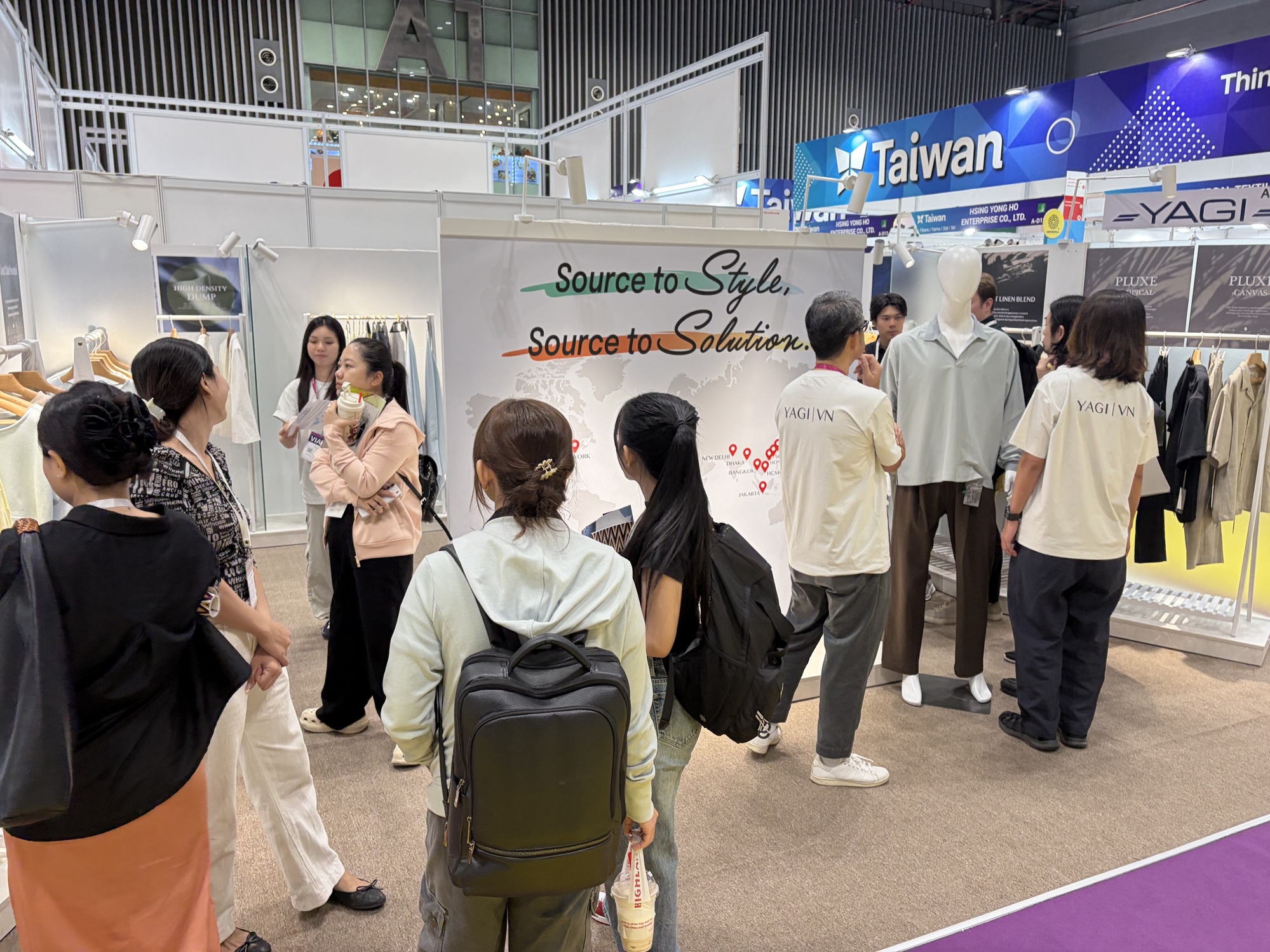
Japanese businesses in Vietnam are entering a turning point. With an eye on the country’s growing domestic market, companies are shifting from producing export‑oriented apparel to accelerating “all‑around” sales within Vietnam. Firms are laying the groundwork by establishing local subsidiaries and strengthening local textile development.
Vietnam’s apparel market is estimated at 6–8 billion USD and continues to grow at around 10% annually. As incomes rise, consumer interest is expanding into higher‑end segments that emphasize quality and brand storytelling. Local mid‑ to high‑end brands are also emerging. Japanese companies see this as a prime opportunity to fully enter the Vietnamese domestic market.
Prominent (Vietnam) Co., Ltd., the local subsidiary of Itochu Corporation, is expanding its domestic sales targets from one main client to four. Leveraging pattern‑making expertise cultivated through production for Japanese brands, the company is accelerating its market development.
Shimada Shoji Vietnam Co., Ltd., a major supplier of auxiliary materials, decided in January to enter the domestic sales market. The company believes that local production for local consumption will shorten lead times and strengthen total cost competitiveness. It is using events such as the international textile fair “VIATT” in Ho Chi Minh City to acquire new customers.
Local textile development is also heating up. Toyoshima & Co., Ltd. is focusing on textiles made with Vietnamese pineapple fiber, developed over two and a half years, aiming for full‑scale adoption by local brands. Shikibo Ltd. is promoting locally produced functional textiles such as highly breathable fabrics for workwear.
Moves to upgrade local operations are also notable. Stylem Takisada‑Osaka Co., Ltd. established a local subsidiary on February 1, replacing its more than 10‑year representative office structure. Fujisaki Textile Co., Ltd. also set up a local corporation last December. Sunwell Co., Ltd. is considering strengthening its presence, including establishing a new base.
However, the domestic market for Japanese textiles in Vietnam remains limited in scale, prompting companies to explore expansion across the entire value chain—from yarn to textiles to finished garments. Local brands are still developing, and the segment capable of adopting high‑value‑added textiles is not yet large. The high‑end women’s brand “Chic Land,” considered the most promising customer for Japanese textiles in Vietnam, is already receiving so many proposals from Japanese companies that it is “already full,” according to one textile trading executive.
In this environment, Stylem Takisada‑Osaka Co., Ltd.’s new subsidiary is prioritizing domestic sales of finished products rather than fabrics. By combining its own textile development with local sewing, the company aims to expand domestic sales in addition to exports. Yagi & Co., Ltd. is also planning to offer a full lineup of yarn, textiles, and finished products for the domestic market.
The market’s potential remains high. An executive at the local high‑end brand “Giovanni” stated, “Japanese products are high quality, and for us—who value storytelling—they offer significant added value.”
On the other hand, branding remains a challenge for Japanese textiles. Some local brands say Japanese textiles “lack fashion appeal compared to Chinese and Korean materials, are expensive, and have long lead times,” suggesting that the strengths of Japanese textiles are not yet widely recognized. Building on their success in the Chinese market, Japanese companies are now entering a phase of redefining the value of Japanese textiles and establishing brand power in Vietnam.